
Records Management Hint #2: How To Build A Retention Schedule That Actually Works.
The fastest way to reduce records related risks are clear rules your team can follow.
Most organisations aren’t overwhelmed by records. They’re overwhelmed by records kept far too long, for no clear reason, and with no defined trigger for when they should be destroyed. In many industries, over retention isn’t just inefficient, it’s a regulatory issue.
Finance, insurance, healthcare, and legal services all have strict records retention and destruction requirements. Keeping information longer than necessary can breach FCA rules, violate GDPR’s storage limitation principle, and expose organisations to unnecessary compliance risk.
Retention itself isn’t complex - People make it complex by copying templates they don’t understand or defaulting to “Lets keep everything forever to be safe.” But “forever” becomes a liability the moment a subpoena, audit request, or regulatory inquiry arrives.
Legacy emails, outdated drafts, old financial records, and forgotten archives can all be pulled into discovery even when they should have been securely destroyed years earlier under mandatory retention destruction rules.
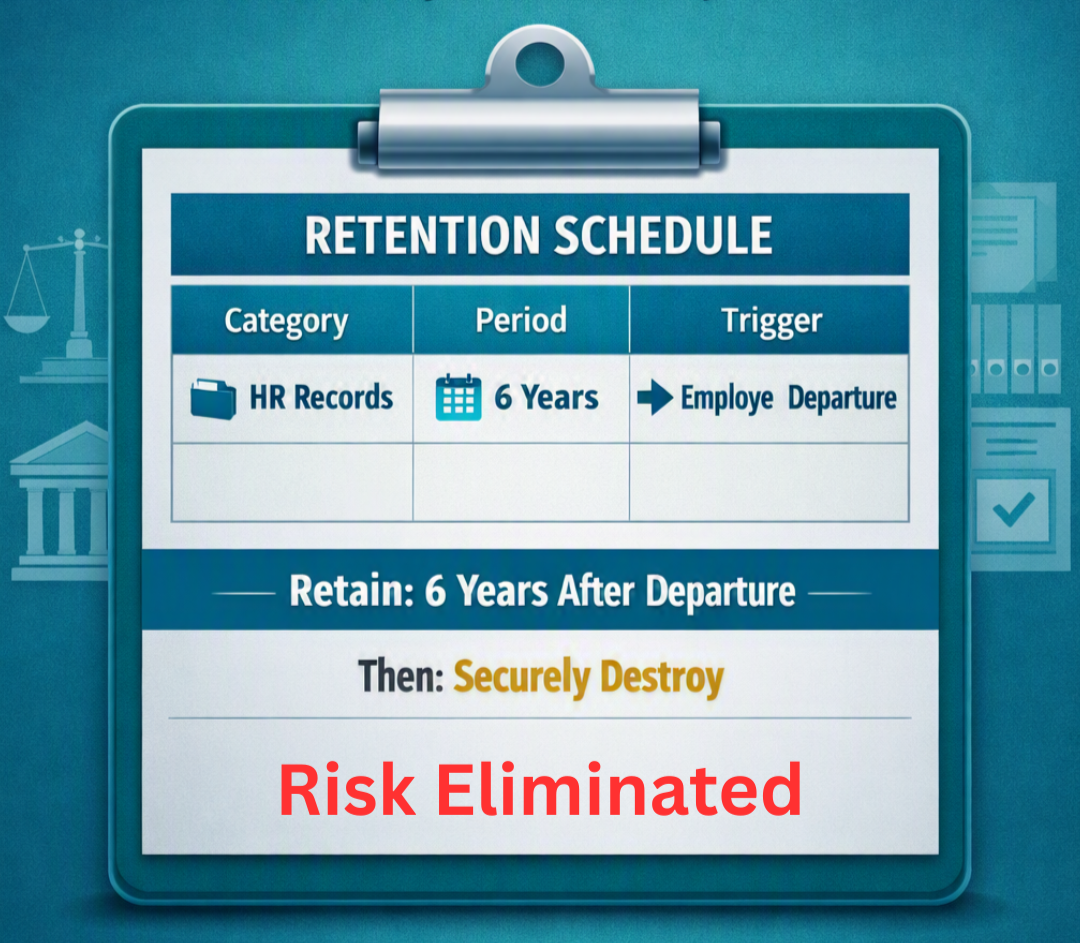
A functional retention schedule only needs three things:
Clear Categories — Define what you keep.
Clear Periods — Define how long you keep it.
Clear Triggers — Define what starts the retention clock.
When these three elements are clear, everything downstream improves. Risk reduces, compliance strengthens, storage costs drop, audit readiness increases, and decision making becomes faster and more confident. A well designed retention schedule is one of the most effective tools in information governance, and one of the simplest.
If your retention feels like guesswork, we can help bring clarity back to your information.
Build the structure. Reduce the risk.