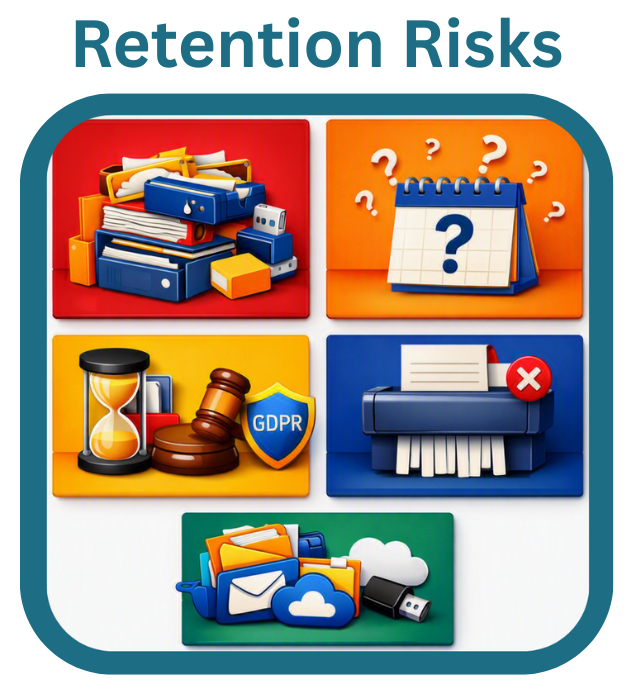
Five Records Retention Mistakes That Could Cost Your Business Thousands.
Most organisations keep far more information than they need. Not intentionally, but because no one is completely sure what can be deleted, when it should be removed, or who is responsible for doing it.
Poor retention rules and destruction practices rarely cause a single dramatic failure. Instead, they quietly increase cost, risk, and legal exposure every day. Over time, these issues compound into operational inefficiencies, compliance gaps, and avoidable liabilities.
Below are the five retention mistakes we see most often when working with clients across both public and private sectors.
One: Keeping Everything “Just in Case”.
Old files, duplicates, outdated versions, and abandoned folders inflate storage costs and bury the information that actually matters. When an organisation receives a subpoena, FOI request, or disclosure order, this clutter becomes a liability. Anything you keep can be requested, reviewed, and used against you.
Two: No Clear Retention Schedule.
If staff don’t know how long something should be kept, they retain information far longer than they should. This leads to inconsistent practices, unnecessary legal exposure, and confusion during audits or investigations.
Regulators expect structured, documented retention rules. Not guesswork!
Three: Holding Records Longer Than Required.
Keeping information beyond its lawful or operational purpose increases legal exposure. GDPR, industry regulations, and statutory retention periods all require timely destruction. Retaining data for longer than necessary creates avoidable compliance risks.
Four: No Documented Destruction Process.
Deleting files is not enough. Organisations must be able to demonstrate what was destroyed, when it was removed, and under what authority.
Without proper destruction logs, it becomes difficult to defend decisions during legal cases, FOI reviews, or regulatory assessments.
Five: Records Scattered Across Too Many Places.
When information sits in email inboxes, shared drives, personal folders, USBs, cloud apps, and collaboration tools, retention becomes impossible to enforce. You cannot manage what you cannot find.
Uncontrolled copies lead to inconsistent deletion, missing evidence, and higher discovery costs.
The Solution
A clear retention schedule and a controlled destruction workflow reduce risk, lower cost, and restore clarity across your information landscape.
At eDocSolutions, we help organisations move from “keep everything” to structured, compliant, and confident information management.
If your organisation needs support improving retention and destruction practices, we’re here to help.