What Is GDPR And Why Does It Matter To Your Business?
Many business owners assume that UK GDPR only applies to large organisations. In reality, if your business handles personal information about customers, employees, suppliers, or prospects, the law applies to you.
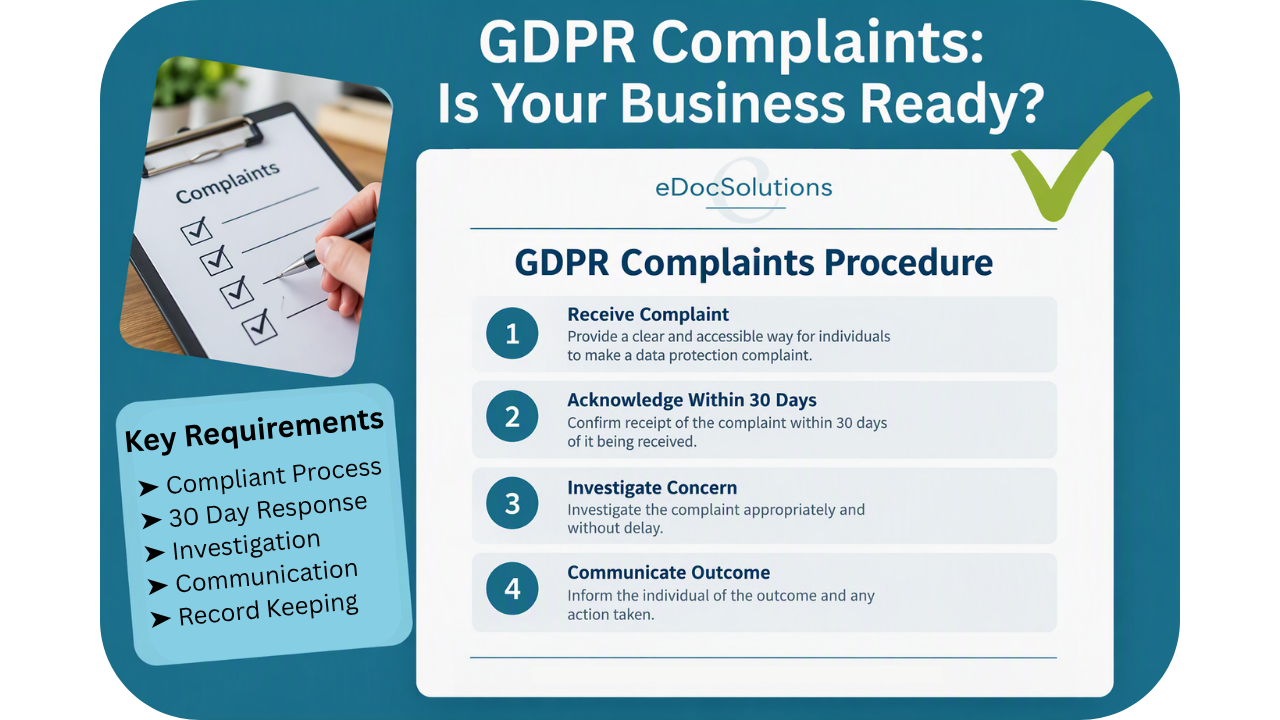
In June 2026, an important change happened that affects businesses of all sizes. Under new legal requirements, businesses must now have a clear process for handling data protection complaints. This includes providing a way for individuals to make a complaint, acknowledging it within 30 days, investigating appropriately, and communicating the outcome.
What Is UK GDPR? (General Data Protection Regulation)
UK GDPR is the law that governs how organisations collect, use, store, and protect personal information.
Personal information can include:
Names and addresses
Email addresses
Telephone numbers
Employee records
Customer information
Marketing databases
The law is designed to ensure organisations handle personal information fairly, securely, and transparently.
What's Changed in 2026?
From June 2026, organisations handling personal data must have a clear process for managing data protection complaints. They must allow individuals to raise concerns directly, acknowledge complaints within 30 days, investigate them without delay, and provide an outcome.
The change is intended to help resolve issues more quickly and reduce the need for people to escalate concerns directly to the Information Commissioners Office (ICO).
Does This Apply to Small Businesses?
Yes. The requirements apply to businesses of all sizes that determine how personal data is used, including small and medium sized businesses, charities, sole traders, and larger organisations.
What Should Businesses Do?
Businesses should consider:
How individuals can submit a data protection complaint?
Who is responsible for handling complaints?
How complaints will be tracked and investigated?
Do staff understand the process?
Can records be located quickly if a complaint is received?
Having clear procedures in place can help organisations respond efficiently and demonstrate accountability.
Why Good Information Management Matters
When a complaint is received, organisations often need to locate emails, documents, records, and other information quickly.
If information is fragmented, poorly organised or difficult to find, responding to complaints can become time consuming and stressful.
Good information management practices help organisations meet their obligations while improving efficiency and reducing risk.
Need Help?
At eDocSolutions, we help organisations improve information governance through practical records management solutions, retention schedules, policies, and governance frameworks.
The 2026 changes are a useful reminder that good records management is not just about compliance. It's about ensuring your business can find the right information at the right time when it matters most.
For further advice on records management and information governance, contact eDocSolutions at
📩 contact@edocsolutions.co.uk.